How One Manager’s $86M Reg A Scheme Exposed Critical Gaps in Alternative Investment Oversight
By Sonn Law Group | August 2026
Introduction: When Regulation A Becomes a Vehicle for Fraud
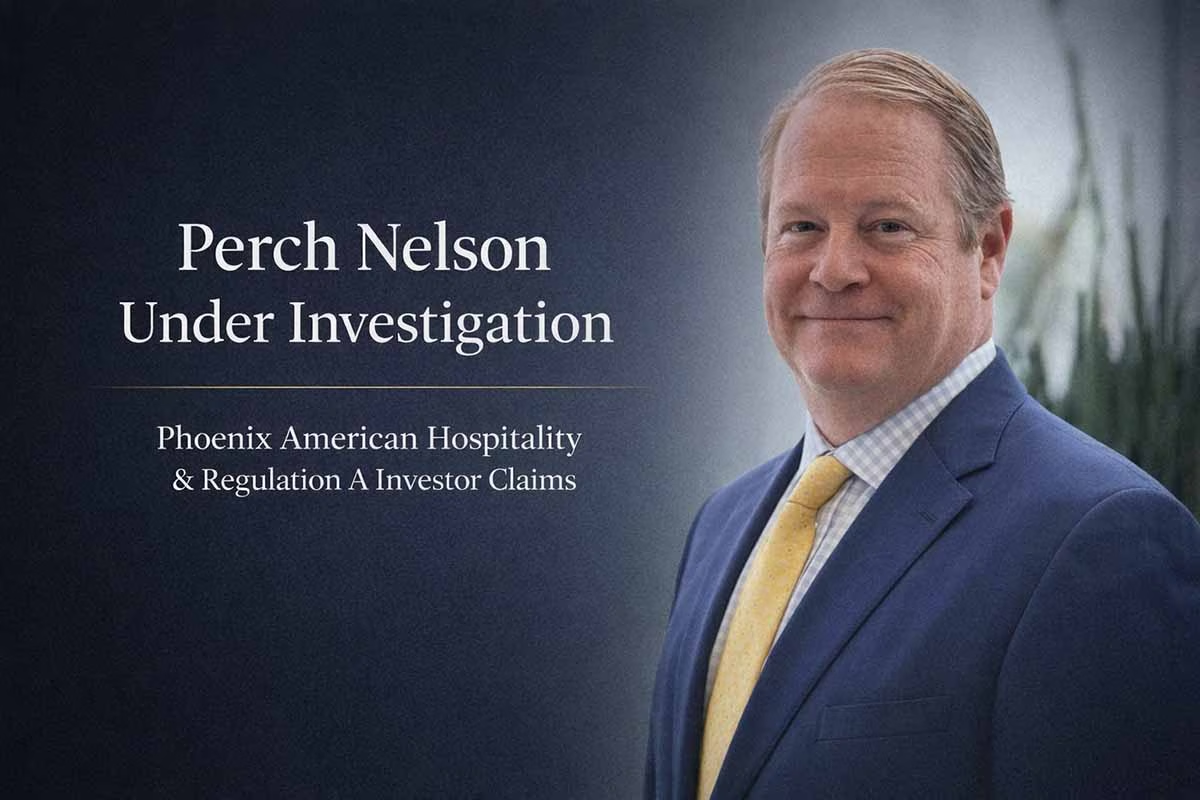
In June 2026, the Securities and Exchange Commission filed a settled action against Phoenix American Hospitality, LLC, and William Lee “Perch” Nelson, PAH’s president, for allegedly making untrue statements to retail investors about the assets held by, and profitability of, two hotel-focused investment funds. What makes this case instructive—and cautionary—is how the alleged $86 million hotel-focused investment scheme pulled in capital from more than 2,000 retail investors under Regulation A.
This isn’t a story about isolated fraud. It’s a case study in how Reg A, despite its investor protections, remains vulnerable to sophisticated misrepresentation when proper oversight and due diligence fail. It’s also a primer for investors on how to identify the warning signs.
What Is Regulation A? Understanding the Context
Before diving into the Nelson case, it’s essential to understand what Regulation A is designed to do—and where it breaks down.
Regulation A: The “Mini-IPO” for Main Street
Regulation A is a securities offering exemption under the Securities Act of 1933 that allows companies to raise capital from both accredited and non-accredited retail investors without filing a full registration statement with the SEC. Unlike Regulation D offerings (which are limited to accredited investors), Reg A opening the doors to mom-and-pop investors—making it a critical pillar of democratic access to capital.
There are two tiers:
- Reg A+ (Tier 1): Up to $20 million in annual offerings
- Reg A+ (Tier 2): Up to $75 million in annual offerings (with additional disclosure and compliance requirements)
In the Phoenix American Hospitality case, the SEC qualified REIT I’s $50 million Regulation A offering in February 2021, and REIT II was organized in March 2023, with the SEC qualifying its $75 million Regulation A offering in September 2023.
Reg A was supposed to democratize capital raising. Instead, in Nelson’s hands, it became a tool for deception.
The Core Fraud: Two Lies That Fooled 2,000+ Investors
The SEC alleged that PAH and Nelson raised approximately $86 million from more than 2,000 retail investors in the two funds from March 2022 through July 2024. The fraud fell into two critical categories:
Lie #1: The Portfolio Misrepresentation
PAH, through Nelson, claimed that one fund owned as many as 11 hotels, while, in reality, the fund owned only a preferred equity interest in a single hotel until January 2024, when it acquired interests in other hotels.
This wasn’t a minor accounting discrepancy. A preferred equity interest gives the holder a priority claim on distributions but does not mean the fund owns or controls the property outright — a materially different position from the full ownership of 11 hotels that investors were led to expect.
The gap is staggering. Between March 2022 and January 2024, investors believed they were diversifying across a portfolio of 11 operating hotel properties. In reality, the fund had a subordinated equity stake in a single property.
How Did Nelson Execute This Misrepresentation?
Nelson directed a consulting firm to create and disseminate similar untrue statements in marketing materials to investors and potential investors. Phoenix American allegedly repeated claims that one REIT had as many as 11 hotels as part of the marketing campaign that sought investors through social media, emails and Nelson-hosted live webinars posted on its website and YouTube.
Lie #2: The Profitability and Distribution Scheme
Even more damaging was the false promise of returns. Nelson told investors that funds were distributing regular annualized payouts of up to 12% sourced from mandatory REIT operating profits. In reality, neither fund was ever profitable.
The numbers tell the story: REIT I earned just over $200,000 through late 2022 but distributed over $1.4 million to investors—using new investor capital to fund the distributions.
This is a classic Ponzi-like mechanism: paying early investors with money from new investors, all while telling both groups that distributions came from actual hotel operations.
Why This Matters: The Broker’s Role in the Crisis
Here’s what many affected investors miss: Investors may have independent legal claims against the brokerage firms and financial advisors who recommended these products, including claims for unsuitability, misrepresentation, or failure to supervise, typically pursued through arbitration.
In many cases, these Reg A offerings are sold through commissioned brokers and financial advisors who fail to:
- Conduct adequate due diligence on the fund manager
- Verify the accuracy of material marketing claims
- Assess suitability for individual clients (especially regarding liquidity and concentration risk)
- Maintain supervisory oversight over recommendations
The Sonn Law Group Perspective: Just because an offering is SEC-qualified doesn’t mean your broker did their job. SEC qualification of a Reg A offering is not an endorsement. It’s a procedural green light—nothing more. Your advisor still has fiduciary and regulatory duties to ensure the recommendation makes sense for you.
The Settlement: Who Pays, Who Doesn’t
Without admitting the allegations in the SEC’s complaint, PAH and Nelson each consented to the entry of a final judgment, in which each agreed to be permanently enjoined from violating the antifraud provisions of Section 17(a) of the Securities Act of 1933 and Section 10(b) of the Securities Exchange Act of 1934 and Rule 10b-5 thereunder. The final judgments also would order PAH to pay a $591,127 civil penalty and Nelson to pay a $118,225 civil penalty, as well as impose a five-year officer and director bar on Nelson.
Critical takeaway: The SEC agreed to drop its investigation for a fine totaling less than 1% of the size of the alleged scheme.
This settlement, while historic in its public rebuke of Nelson, amounts to a slap on the wrist compared to investor losses. The civil penalties go to the U.S. Treasury—they do nothing to compensate victims. That’s where alternative recovery avenues (FINRA arbitration, broker-dealer liability claims) become critical.
What Happened to the REITs?
Both REITs had cut ties with PAH and Nelson roughly two weeks before the SEC filed its complaint. Effective May 20, 2026, REIT I and REIT II terminated their management agreements with PAH, and Nelson resigned from his roles as chief executive officer and director of both companies.
Once the board woke up, they acted decisively. But by then, more than 2,000 investors had already been harmed.
Critical Lessons: How to Avoid the “Perch Nelson” in Your Portfolio
1. Understand the Difference Between Preferred Equity and Ownership
If a fund manager tells you they “own” or “control” hotels, verify the actual legal structure. Preferred equity interest means subordinated claims—a vastly different risk profile than fee-simple ownership.
2. Follow the Money: Demand Proof of Profitability Before Celebrating Distributions
A fund that consistently pays 12% distributions while reporting minimal profits is distributing investor capital, not operating income. That’s unsustainable and deceptive.
3. Cross-Reference Claims Independently
If marketing materials claim a fund owns 11 hotels, request the official list. Verify through public records and commercial real estate databases. Don’t rely solely on the fund manager’s representations.
4. Beware the “Qualified Reg A Offering” as a Trust Signal
SEC qualification of a Reg A offering means the paperwork was in order—not that the fund is safe or the manager is honest. Nelson’s offerings were SEC-qualified. That didn’t stop the fraud.
5. Assess Your Broker’s Duty of Care
Ask your advisor:
- Did you verify the fund manager’s claims independently?
- Did you assess whether this illiquid investment is suitable for my liquidity needs?
- Did you supervise your recommendation as the product evolved?
A “yes” to all three matters. If not, that’s a potential claim.
Your Recovery Options: FINRA Arbitration vs. Class Actions
If due diligence failures or unsuitable recommendations took place, investors can bypass slow-moving class actions and file a direct claim through FINRA arbitration to recover their lost principal.
FINRA arbitration is faster, private, and more favorable for individual investors than litigation or class actions. Statute of limitations is six years from discovery of harm—so for many affected investors, there’s still time.
Sonn Law Group is actively investigating Perch Nelson and Phoenix American Hospitality claims. We pursue claims against the brokers and advisors who sold these products without adequate due diligence.
Conclusion: Reg A Fraud and the Future of Retail Investing
The Perch Nelson case is a watershed moment for Regulation A oversight. It shows that the SEC, working with cooperative issuers, can move swiftly once fraud is identified. But it also reveals a gap: victims aren’t automatically compensated by SEC settlements.
Recovery happens when investors—with the right counsel—hold the true culprits accountable: the brokers, advisors, and platforms that facilitated the sale of these fraudulent securities.
Sonn Law Group is actively investigating investor losses tied to Phoenix American Hospitality, American Hospitality Properties REIT I & II, and related alternative real estate offerings. Our legal team aggressively pursues claims against brokerage firms and financial entities that fail to protect their clients from mismanaged alternative investments.
If you invested in PAH funds or similar Reg A offerings through a broker and suffered losses, your next step is a confidential legal review—free of charge.