
Drive Planning LLC founder and CEO Russell Todd Burkhalter has pleaded guilty to wire fraud in connection with what federal prosecutors described as “likely the largest Ponzi scheme in Georgia history.” According to the U.S. Department of Justice, Burkhalter and Drive Planning defrauded more than 2,000 investors out of approximately $380 million through investment offerings that were promoted as real estate-backed opportunities.
(Official DOJ Announcement)
Although Burkhalter’s guilty plea was announced in January 2026, the investor recovery process remains ongoing. The court-appointed receiver is still administering the Drive Planning receivership, claims appeals are pending before the Court, and a final plan of distribution has not yet been approved.
(Official Drive Planning Receivership Website)
For investors who lost money, the case raises an important question: Will the receivership be enough to make victims whole, or should investors evaluate additional legal recovery options?
What Federal Prosecutors Say Happened
According to the DOJ, Burkhalter and Drive Planning raised investor funds through programs that were allegedly marketed as real estate-related investments. Investors were allegedly told their money would be used for short-term loans to developers and that the investments were backed by real estate collateral.
Instead, prosecutors stated that investor funds were used to pay earlier investors, pay commissions, and fund Burkhalter’s personal spending. The DOJ identified alleged expenditures including a yacht, luxury vehicles, private jet travel, jewelry, clothing, beauty treatments, and a luxury condominium in Cabo San Lucas, Mexico.
The U.S. Securities and Exchange Commission previously filed a civil enforcement action against Drive Planning LLC and Russell Todd Burkhalter, alleging that the defendants operated a real estate Ponzi scheme involving more than 2,000 investors. The SEC announced that it obtained emergency relief, including a preliminary injunction, an asset freeze, and the appointment of a receiver.
(Official SEC Litigation Release)
(Official SEC Complaint)
The FBI Has Sought Information From Drive Planning Investors
The FBI’s Atlanta Division has also sought information from Drive Planning investors. The FBI stated that individuals who invested in Drive Planning, or who have information relevant to the investigation, may submit information through its official victim information page.
(Official FBI Victim Information Page)
Investors should be careful to rely only on official sources when submitting information or reviewing case updates. Fraud victims are sometimes targeted again by recovery scams, impersonators, or misleading communications that claim to offer fast repayment.
The Drive Planning Receivership Is Still Ongoing
A court-appointed receiver has been appointed over Drive Planning LLC’s assets in connection with the SEC enforcement action. The receiver’s role is to locate, preserve, and recover assets for the benefit of the receivership estate. The receiver does not represent individual investors and cannot provide individual legal advice.
According to the official Drive Planning receivership website, the receiver has filed all appeals of final claim determinations and responses with the Court. The receiver is currently awaiting the Court’s decision on those appeals. Once the Court issues a final decision, the receiver will have 30 days to submit a proposed Plan of Distribution for Court approval.
The receivership’s important-dates page currently lists the receiver’s deadline to file a motion approving a Plan of Distribution and proposed initial distribution amounts as “TBD.”
That means investors may still be waiting to learn how much they will recover through the receivership process.
Investors May Not Receive a Full Recovery Through the Receivership
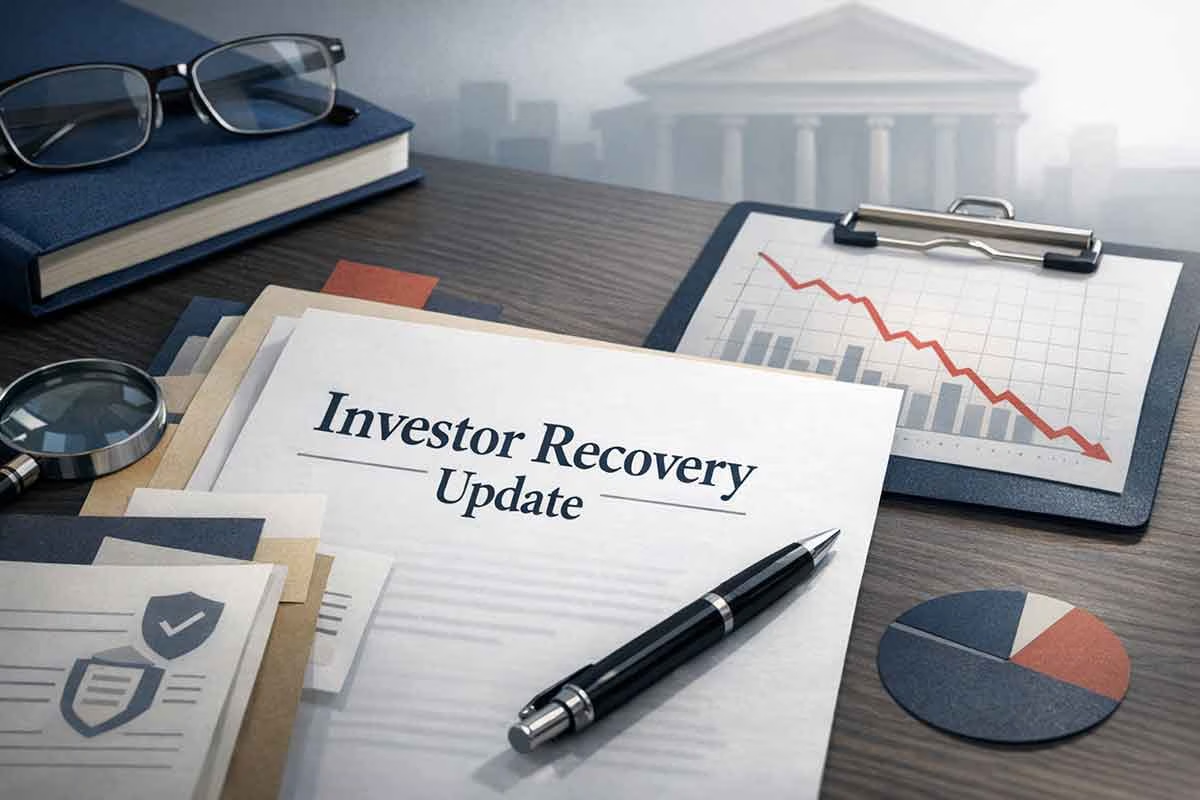
The receivership process may provide an important path toward recovery, but it may not fully compensate every investor. In an investor update posted by the receiver, investors were told that the distribution would be based on net loss only, meaning the amount invested minus the amount received back. The receiver also stated that investors are not likely to receive a 100% return of their investments through the receivership estate.
This is a critical issue for victims. When a Ponzi scheme collapses, the available recovered assets are often far less than the total amount lost by investors. Even when a receiver successfully freezes accounts, sells assets, pursues claims, and recovers funds, the resulting distribution may represent only a portion of investor losses.
Why This Case Matters for Investors
The Drive Planning case is a major reminder that fraud can be hidden behind investments that sound safe, sophisticated, or asset-backed. Real estate investments, promissory notes, private funds, and high-yield lending programs may be marketed as secure alternatives to traditional investments, but investors can suffer devastating losses when promoters misrepresent how funds are being used.
Common warning signs of Ponzi schemes and investment fraud may include:
- Promises of unusually high or consistent returns;
- Claims that investments are “safe,” “secured,” or “guaranteed”;
- Vague explanations about how investor funds generate returns;
- Pressure to reinvest profits instead of withdrawing funds;
- Heavy reliance on referrals, affinity groups, or personal trust;
- Commissions or incentives paid to promoters;
- Lack of audited financial statements;
- Resistance to investor questions or redemption requests;
- Complex private investment structures with limited transparency;
- Use of new investor money to pay earlier investors.
According to federal authorities, Drive Planning investors were allegedly told their investments were tied to real estate opportunities, while investor money was instead misused in ways that included paying earlier investors and funding personal expenditures.
(Official DOJ Announcement: JUSTICE)
Investors May Have Legal Options Beyond the Receivership
While the receivership may be an important recovery mechanism, investors may need to evaluate whether they have additional claims against other potentially responsible parties.
Depending on the facts, investors may have claims involving:
- Securities fraud;
- Unsuitable investment recommendations;
- Misrepresentations or omissions;
- Failure to conduct adequate due diligence;
- Negligent supervision;
- Breach of fiduciary duty;
- Selling unregistered securities;
- Unlicensed securities sales activity;
- Aiding and abetting liability;
- Claims against financial professionals, promoters, advisory firms, brokerage firms, or other third parties.
Every investor’s situation is different. Important questions may include:
- Who recommended the Drive Planning investment?
- Was the investment recommended by a licensed broker or investment adviser?
- Were commissions, referral fees, or other compensation paid?
- What written materials were provided to the investor?
- Were risks properly disclosed?
- Did any third party fail to conduct due diligence before promoting the investment?
- Did the investor sign subscription agreements, promissory notes, loan documents, or other offering materials?
- Were the investor’s funds wired directly to Drive Planning or through another person or entity?
These facts may affect whether an investor has potential claims outside the receivership process.
What Drive Planning Investors Should Do Now
Investors who lost money in Drive Planning should consider taking steps to protect their rights and preserve potential claims.
Important documents may include:
- Subscription agreements;
- Promissory notes;
- Loan agreements;
- Private placement materials;
- Marketing materials;
- Emails and text messages with promoters;
- Wire transfer confirmations;
- Bank records;
- Account statements;
- Tax forms;
- Receipts or confirmations of payments received;
- Communications with any broker, adviser, sales agent, or referral source;
- Any documents submitted through the receivership claims process.
Investors should also monitor official case updates from the receiver, the SEC, the DOJ, and the FBI.
Sonn Law Group Represents Investors in Ponzi Scheme and Financial Fraud Matters
Sonn Law Group represents investors in financial fraud, Ponzi scheme, securities fraud, investment loss, class action, and whistleblower matters.
Investors who lost money in Drive Planning LLC or similar real estate-backed investment programs may have questions about the receivership process, potential recovery options, and whether additional claims may exist against individuals or entities that recommended, sold, promoted, or facilitated the investment.
The Drive Planning case is still developing from an investor recovery standpoint. Although the criminal guilty plea is an important milestone, the receivership process remains ongoing, claims appeals are still before the Court, and a proposed distribution plan has not yet been approved.
For many investors, the key issue now is not only what happened, but what recovery options may still be available.