The prospect of investing in the next SpaceX, Stripe, OpenAI, or other high-profile private company before it goes public can be incredibly appealing. Access to pre-IPO shares is often marketed as an exclusive opportunity available only to a select group of investors.
But as a recent federal criminal case demonstrates, the excitement surrounding private-company investing can also create fertile ground for fraud.
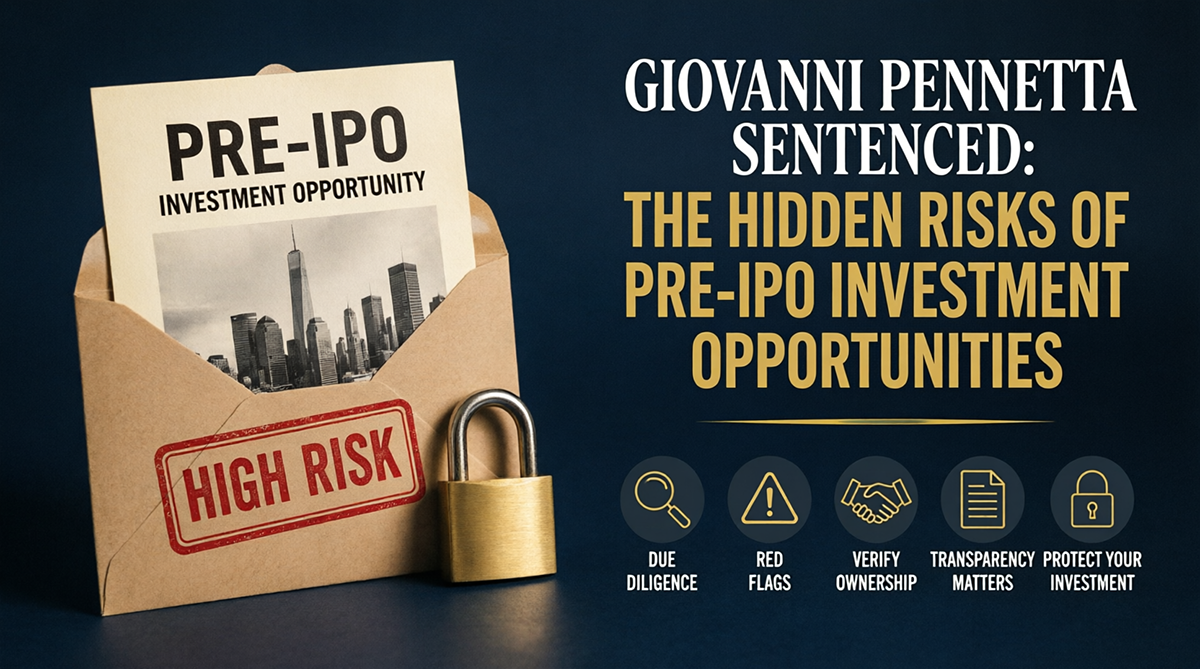
Federal prosecutors recently announced the sentencing of Giovanni Pennetta, a former investment firm manager who was convicted for defrauding investors in connection with purported pre-IPO investment opportunities. According to authorities, Pennetta solicited investor funds for investments that were represented as opportunities to acquire shares in private companies before they became publicly traded. (www.justice.gov/usao-sdny/pr/manager-investment-firm-sentenced-four-years-prison-defrauding-investors-pre-ipo)
While the specific allegations are unique to that case, the underlying lessons apply broadly to anyone considering a private-market investment.
Why Pre-IPO Investments Attract Fraud
Private-company investing has become increasingly popular as some of the world’s most valuable companies remain private for longer periods of time.
That demand creates an opportunity for bad actors to exploit investors eager to gain early access to promising companies.
When investors believe they are receiving access to a limited allocation of highly sought-after shares, they may be more likely to overlook warning signs that would otherwise raise concerns.
Common Red Flags in Pre-IPO Offerings
Exclusivity Claims
Fraudulent offerings often rely on the idea that only a small group of investors can participate.
Statements such as “this allocation is almost full” or “this opportunity is only available to a handful of investors” should prompt additional diligence rather than urgency.
High-Pressure Deadlines
Legitimate investments generally withstand scrutiny.
Investors should be cautious when promoters insist that immediate action is required before basic due diligence can be completed.
Lack of Independent Verification
One of the most important questions investors can ask is simple:
Does the seller actually own or control the shares being offered?
If ownership cannot be independently verified, investors should proceed with extreme caution.
Complex Structures
Many pre-IPO transactions involve special purpose vehicles (SPVs), holding companies, and layered ownership structures.
While these arrangements can be legitimate, complexity should never replace transparency.
Investors should understand exactly what they are purchasing and how ownership rights are being conveyed.
No Direct Confirmation
Investors frequently rely on representations made by promoters without independently confirming the existence of the shares or the legitimacy of the transaction.
Whenever possible, investors should seek documentation from reliable third-party sources and confirm that the proposed investment structure is legitimate.
Due Diligence Matters
The most effective defense against investment fraud is often thorough due diligence before funds are invested.
That includes verifying ownership, reviewing offering documents, understanding the legal structure of the investment, and ensuring that representations made by promoters can be independently confirmed.
As federal prosecutors noted following the sentencing, the pre-IPO market remains subject to the same anti-fraud laws that govern public securities markets. Investors should approach private-market opportunities with the same level of caution and scrutiny they would apply to any other investment.
Conclusion
The Giovanni Pennetta case serves as a reminder that access to exclusive investment opportunities should never replace careful due diligence.
The pre-IPO market can present legitimate opportunities, but investors must look beyond polished presentations, exciting company names, and time-sensitive sales pitches. Before investing, it is critical to confirm that the shares being offered are authentic, properly documented, and legally controlled by the party offering them for sale.
In private markets, transparency remains one of the most valuable protections an investor can have.
Sources
U.S. Department of Justice Press Release:
(www.justice.gov/usao-sdny/pr/manager-investment-firm-sentenced-four-years-prison-defrauding-investors-pre-ipo)