
A call, text message, or pop-up warning says your account has been hacked. The caller claims to be from your brokerage firm, bank, the FBI, Social Security, or another government agency. They tell you that your money is at risk and that you need to move it immediately.
The instructions often sound urgent and specific. Sell securities. Withdraw retirement money. Wire the proceeds to a “safe” account. Buy cryptocurrency. Purchase gold. Keep the conversation secret.
By the time the investor realizes the story was false, the money may already be gone.
FINRA recently warned investors about a growing pattern of scams in which victims are pressured to liquidate assets held in brokerage accounts and transfer the proceeds to criminals. FINRA states that victims can lose thousands of dollars and, in some cases, millions within weeks. (FINRA)
If you lost money in this type of scam, one important question is whether the brokerage firm had information that should have caused it to slow down, investigate, contact the customer, or take other protective steps.
The answer depends on the facts. A brokerage firm is not automatically responsible every time a customer is deceived by an outside scammer. But unusual transactions, changes in customer behavior, inconsistent explanations, and other warning signs can matter.
How Brokerage Account Scams Often Work
These schemes usually begin with impersonation.
A criminal may pose as a representative of a financial institution, a government agency, a technology company, a law enforcement office, or a well-known business. The scammer creates fear and urgency by claiming that the victim’s account has been compromised, that the victim is under investigation, or that the victim must act quickly to protect their money.
The scammer may then direct the investor to:
- Sell stocks, bonds, mutual funds, or other securities;
- Liquidate an IRA, retirement account, or managed account;
- Wire money to a new bank account;
- Transfer money to a supposed “safe account”;
- Buy cryptocurrency and send it to a wallet controlled by the scammer;
- Buy gold, cash, or other assets for delivery to a third party; or
- Open an account at another financial institution.
FINRA warns that scammers may coach victims about what to say if a brokerage firm or bank asks questions. The investor may be told not to disclose the real reason for the transfer or to describe the transaction as a personal purchase, family expense, or investment opportunity. (FINRA) citeturn4search0
That type of coaching can make it harder for financial professionals to identify the fraud. It can also become important evidence when reviewing how the firm handled the transaction.
When Should a Brokerage Firm Ask More Questions?
A brokerage firm cannot prevent every fraudulent transfer. Customers have the right to make many legitimate investment and withdrawal decisions. Still, firms may have a responsibility to supervise accounts, follow their internal policies, and respond appropriately when activity appears unusual or inconsistent with the customer’s known circumstances.
Potential warning signs may include:
- A sudden request to liquidate a long-held investment portfolio;
- A large transfer that is inconsistent with the investor’s age, objectives, or prior account activity;
- An elderly or vulnerable customer acting with unusual fear, urgency, or confusion;
- A customer who seems to be following a script;
- Conflicting explanations for a wire, withdrawal, or account transfer;
- Repeated large withdrawals over a short period;
- A request to send money to an unfamiliar third party;
- A customer who has previously expressed concern about fraud or account security;
- A transfer connected to cryptocurrency, precious metals, or a newly opened account; or
- Communications suggesting that someone else is directing the customer’s actions.
No single factor determines whether a claim exists. The key issue is whether the firm had enough information to recognize a possible problem and whether its response was reasonable under the circumstances.
The Questions That Matter After a Major Loss
After a substantial brokerage-account scam loss, investors and families should focus on the actual record.
A lawyer reviewing the matter may examine questions such as:
- What was the customer’s history?
Was the transaction inconsistent with years of prior investment behavior? - How large was the withdrawal or liquidation?
A sudden request to sell a large retirement or investment account can require closer attention than an ordinary withdrawal. - Did the customer speak with firm personnel?
Notes, emails, branch visits, recorded calls, and communications with financial advisors may show what the firm knew. - Were there visible signs of exploitation?
Fear, confusion, urgency, pressure from an unknown person, or inconsistent explanations can be relevant. - What did the firm do after the concern became apparent?
Did it ask follow-up questions, contact a trusted person when permitted, escalate the issue internally, delay the transfer, or simply process the transaction? - Where did the money go?
The destination of the money may help explain whether the transaction had characteristics associated with a scam.
These facts can determine whether an investor has a viable claim against a brokerage firm, financial advisor, or another responsible party.
What To Do Immediately
Time matters after a fraudulent transfer.
If you believe that you or a family member was scammed into moving money from a brokerage account, take these steps as quickly as possible:
- Contact the brokerage firm using the phone number listed on its official website or account statement;
- Ask the firm to secure the account and preserve all records related to the transaction;
- Contact the receiving bank or financial institution if one is known;
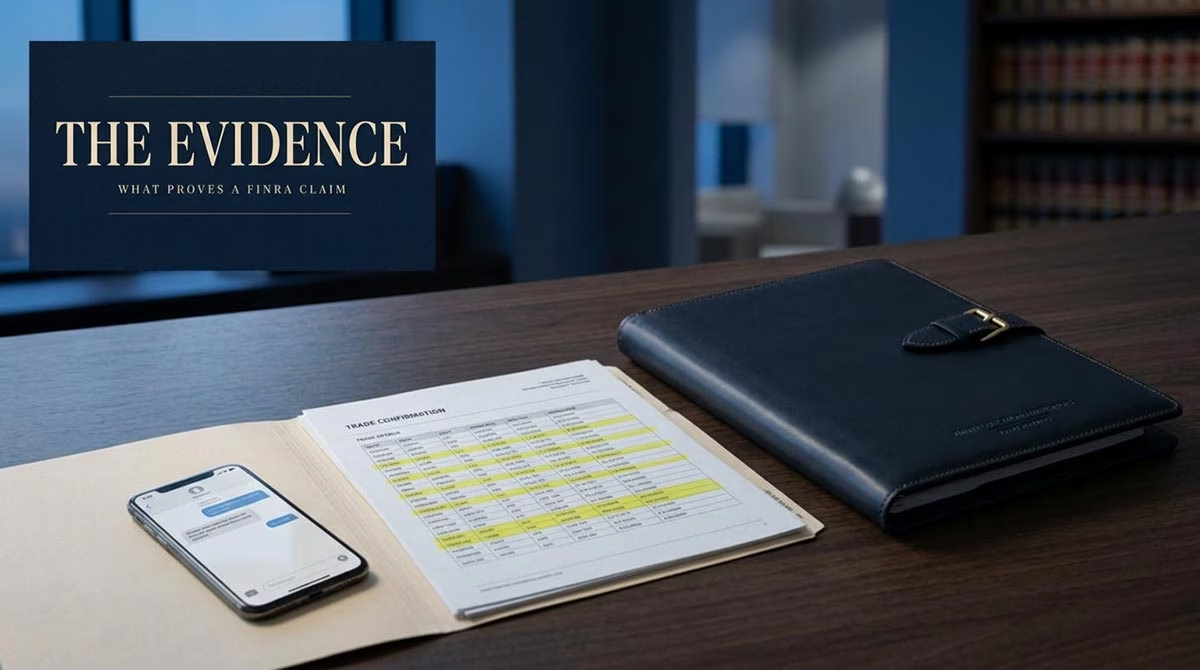
- Preserve emails, text messages, call logs, wire instructions, screenshots, and account statements;
- Write down every conversation with the brokerage firm, including dates, names, and what was said;
- Avoid paying a third-party “recovery company” that requests an upfront fee or claims it can guarantee recovery;
- Speak with an experienced securities attorney before signing a release, waiver, settlement agreement, or other document presented by a financial institution.
It is also important to preserve records showing the investor’s prior account history. Older statements, prior investment objectives, and previous withdrawal patterns may help establish whether the transaction was out of character.
Can a FINRA Arbitration Claim Be Available?
Many brokerage customer agreements require disputes to be resolved through FINRA arbitration rather than in court. FINRA arbitration may be available when a claim involves a FINRA member firm or an associated person, but eligibility and strategy depend on the specific facts, the parties involved, and the governing agreements. (FINRA)
A FINRA arbitration claim may involve allegations related to inadequate supervision, failure to follow internal procedures, failure to respond to suspicious activity, misleading advice, or other brokerage-firm conduct. Every case is different. Investors should not assume that the existence of a scam alone establishes liability.
The important step is to have the account records and transaction history reviewed before important evidence disappears or legal deadlines pass.
Contact Sonn Law
If you lost $100,000 or more after being pressured to sell securities, withdraw retirement funds, wire money, purchase cryptocurrency, or move assets from a brokerage account, Sonn Law can review the circumstances of the transaction.
Our attorneys evaluate substantial investor-loss matters involving possible brokerage-firm misconduct, inadequate supervision, suspicious transactions, and financial exploitation.
Contact Sonn Law for a confidential consultation.
No recovery is guaranteed. Each matter depends on its specific facts, available evidence, responsible parties, account agreements, and applicable deadlines.