FINRA complaints can give investors important insight into alleged misconduct involving brokerage firms, financial advisors, private placements, excessive trading, and failures of supervision.
A complaint is not a final finding. The allegations discussed below have not been proven unless a case is later resolved through a settlement, hearing decision, or other final action. Investors should not assume wrongdoing based on a complaint alone.
Still, complaints involving substantial alleged losses, undisclosed conflicts, excessive fees, or vulnerable investors deserve close attention. This October 2026 update reviews several FINRA matters involving alleged investor harm or investment activity exceeding $100,000.
Spartan Capital Securities, John Lowry, and Kim Monchik: Atlas Funds and Private Placements
FINRA filed a complaint against Spartan Capital Securities, John Dennis Lowry, and Kim Marie Monchik involving private-placement offerings connected to entities known as the Atlas Funds.
According to FINRA, Spartan Capital recommended securities with a total principal value of more than $24 million to 191 customers through 16 private-placement offerings. FINRA alleges that the firm and Monchik failed to conduct reasonable due diligence and lacked a reasonable basis to believe that the recommendations were suitable or in customers’ best interests.
FINRA also alleges that Spartan Capital generated more than $2.4 million in placement fees from the recommendations. The complaint further alleges that the Atlas Funds and their manager charged customers $3.25 million in markups, while the offering documents did not fully disclose conflicts, ownership interests, and economic incentives connected to the investments. (FINRA)
Private placements can be difficult for investors to evaluate. They may involve limited liquidity, complex ownership structures, high fees, and valuations that are not readily available through public markets.
What investors should review
Investors who purchased an Atlas Fund interest or another private placement through a brokerage firm should retain:
- Subscription agreements;
- Private placement memoranda;
- Fund operating agreements;
- Account statements;
- Wire-transfer confirmations;
- Sales presentations and emails;
- Documents showing fees, commissions, or markups; and
- Communications about liquidity, valuation, or expected returns.
Source: (FINRA)
Sutter Securities and Keith Charles Moore: Alleged Excessive Trading and More Than $1.8 Million in Realized Losses
FINRA named Sutter Securities Incorporated and its former chief executive officer, Keith Charles Moore, in a complaint involving alleged excessive trading in the accounts of a retired, 89-year-old customer.
According to the FINRA BrokerCheck disclosure, the complaint alleges that a registered representative recommended and effected 2,217 trades in the customer’s accounts. FINRA alleges that the customer’s accounts incurred approximately $2.5 million in trading costs and more than $1.8 million in realized losses.
The complaint further alleges that, in many instances, the representative did not consult the customer before placing trades. FINRA also alleges that Sutter and Moore failed to identify, investigate, and follow up on warning signs associated with excessive trading. (FINRA)
Excessive trading can be especially harmful because it may produce large commissions, trading costs, and tax consequences while steadily reducing the value of an investor’s account.
Potential warning signs of excessive trading
Investors should consider a closer review if they see:
- Frequent purchases and sales with no clear investment purpose;
- High commissions, transaction fees, or margin interest;
- Repeated turnover in a supposedly long-term account;
- A broker who controls the timing and selection of trades;
- Trades made without meaningful discussion or authorization;
- Account activity inconsistent with the investor’s age, goals, or risk tolerance; or
- Large losses despite a period of active trading.
Source: (FINRA)
Gustave James Schmidt Jr.: Alleged Undisclosed Compensation in Pre-IPO Offerings
FINRA filed a complaint against Gustave James Schmidt Jr. alleging that he deceived investors and omitted material information concerning compensation connected to private-placement offerings involving pre-IPO companies.
According to FINRA, Schmidt recommended that customers purchase interests in pre-IPO companies through private placements with a total principal value of $437,100. FINRA alleges that the offering materials disclosed placement compensation of up to ten percent, while additional compensation and profit-sharing arrangements were not fully disclosed to investors.
FINRA further alleges that Schmidt received at least $19,888.05 in undisclosed compensation and did not fully disclose material conflicts of interest connected to the recommendations. (FINRA)
Pre-IPO opportunities can be attractive because they are presented as early access to successful private companies. But investors should understand exactly what they are buying, how the broker is compensated, whether the investment is illiquid, and whether the offering documents disclose conflicts and fees.
Questions investors should ask before investing in a private placement
- Does the broker or firm receive a commission, markup, placement fee, or other compensation?
- Does the broker have a financial interest in the issuer, fund, or manager?
- Am I purchasing company stock directly, or an interest in a fund or special-purpose vehicle?
- Can the investment be sold or redeemed?
- Who determines the investment’s value?
- Are all fees and conflicts disclosed in writing?
Source:
(FINRA)
Kirk James Crossen: Alleged $400,000 in Loans From an Elderly Customer’s Trust
FINRA filed a complaint against Kirk James Crossen alleging that he borrowed a total of $400,000 through three loans from a customer.
According to FINRA, the customer was a trust whose beneficial owner was 84 years old and suffered from diminished capacity. FINRA alleges that Crossen’s firm did not permit borrowing from customers under its written supervisory procedures. FINRA also alleges that Crossen falsely stated in annual compliance questionnaires that he had not borrowed money from customers. (FINRA)
A financial professional borrowing from a client can create serious conflicts of interest. This is particularly concerning when the client is elderly, vulnerable, dependent on the broker, or unfamiliar with the investment industry.
Red flags involving a broker’s personal financial requests
Investors and families should be cautious when a broker or advisor asks a client to:
- Make a personal loan;
- Invest in the broker’s outside business;
- Write checks payable to the broker;
- Wire money to an account controlled by the broker;
- Purchase an undisclosed private investment;
- Keep a transaction secret from the brokerage firm; or
- Avoid discussing the transaction with family members.
Source:
(FINRA)
What Investors Should Do After a Substantial Loss
Investment losses can happen for many reasons. A decline in value alone does not mean a broker, advisor, or brokerage firm is liable.
However, investors may benefit from a legal review when losses involve:
- Excessive trading or high commissions;
- Unauthorized transactions;
- Private placements or pre-IPO investments;
- Undisclosed fees, markups, or conflicts of interest;
- Misrepresentations about risk, value, or liquidity;
- Borrowing or personal financial dealings by a broker;
- Elder financial exploitation;
- Unsuitable recommendations;
- Improper concentration in risky investments; or
- A brokerage firm’s failure to respond to warning signs.
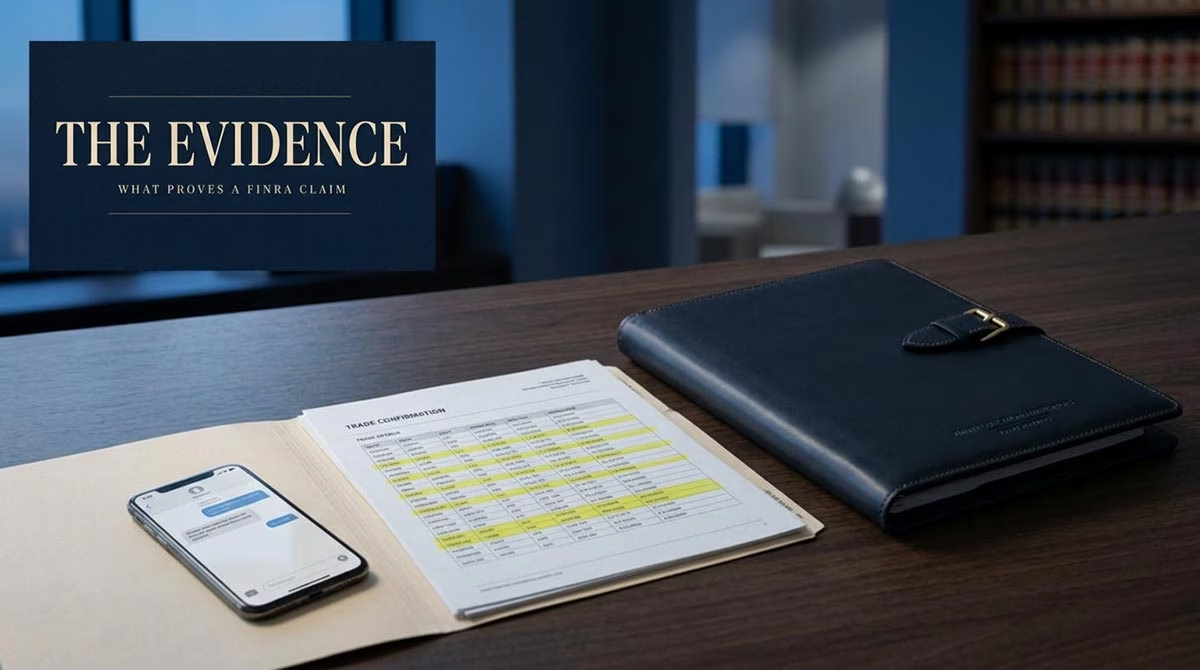
Investors should preserve account statements, trade confirmations, emails, text messages, subscription documents, wire records, tax forms, and communications with the broker or firm.
FINRA’s BrokerCheck system allows investors to research brokers and brokerage firms, including registration history, regulatory events, customer disputes, and other reportable disclosures.
BrokerCheck:
(FINRA)
Contact Sonn Law
Sonn Law represents investors in securities arbitration and investment-loss matters involving broker misconduct, excessive trading, unsuitable recommendations, private placements, undisclosed conflicts, and failures of supervision.
If you suffered substantial investment losses, particularly losses of $100,000 or more, contact Sonn Law for a confidential review of your account records and potential legal options.
No recovery is guaranteed. Every matter depends on the individual facts, available evidence, responsible parties, account agreements, and applicable deadlines.