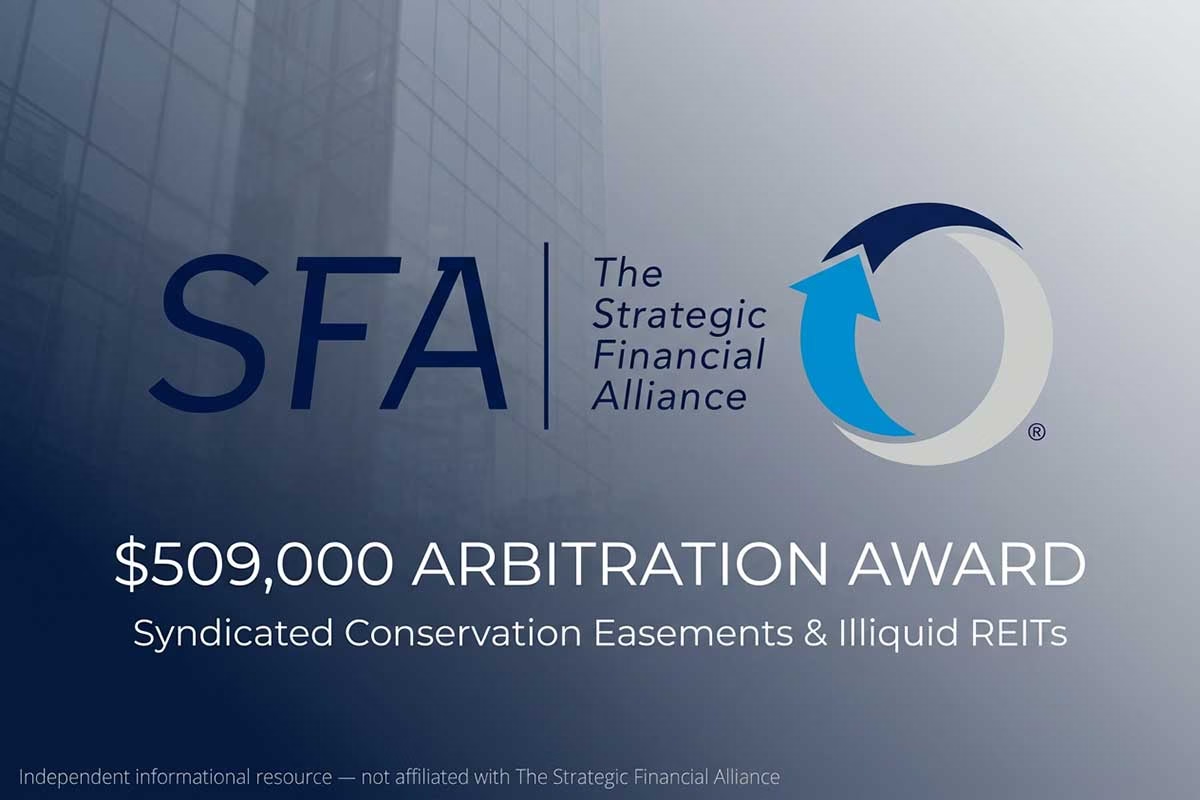
A three-person FINRA Dispute Resolution Services panel has awarded $509,000 to an investor family in a dispute over syndicated conservation easements, illiquid REITs, and whole life insurance sold by an Atlanta broker-dealer and the way the panel calculated damages may matter as much as the number itself.
💬 “This is an important win for investors, because the arbitration panel awarded ‘well managed portfolio’ damages, designed to compensate the investors for the lost opportunity of receiving a return on their investment had it been managed properly from the beginning.”
— Jeffrey Sonn, nationally known securities lawyer for investors, Sonn Law Group, Miami, Florida
What the Panel Decided
The award, released this week, resolved claims brought in 2023 by the Mills family against The Strategic Financial Alliance Inc., an Atlanta-based broker-dealer. The family alleged the firm’s recommendations were unsuitable, spanning whole life insurance policies, illiquid real estate investment trusts, and syndicated conservation easements.
The panel awarded $509,000 in damages.
According to reporting by Bruce Kelly at InvestmentNews, a scan of FINRA’s arbitration database turned up no prior final decisions using the term “land easement” – making this award potentially the first of its kind. Other firms, attorneys note, have been resolving easement claims through settlement rather than litigating them to a decision.
Why “Well Managed Portfolio” Damages Matter
Most investors assume a recovery means getting their money back. That framing undersells what they may actually be owed.
Well-managed-portfolio damages (sometimes called market-adjusted damages) ask a different question: not “what did you lose?” but “where would you be today if your portfolio had been handled properly from the start?” The measure captures the return a suitably managed account would reasonably have generated over the same period.
For a family whose capital sat locked in illiquid REITs and easement partnerships for years, the difference between those two measures can be substantial. Out-of-pocket loss ignores the years of compounding that never happened. A well-managed-portfolio award does not.
That the panel adopted this measure here is the detail practitioners should note.
What Syndicated Conservation Easements Are and Why the IRS Has Been Watching
Syndicated conservation easement deals are high-risk private placements structured around charitable contribution deductions tied to land conservation. Some have marketed deductions at roughly four to four-and-a-half times an investor’s contribution – turning a $100,000 investment into $400,000 or more in claimed deductions.
The IRS has questioned the appraisals and valuations underpinning those figures. InvestmentNews reported the agency’s scrutiny of these deals as far back as 2017.
These products are also concentrated in a particular corner of the industry. Bloomberg reported in 2021 that they are “mostly promoted by brokers who run their own practices” at smaller, lesser-known securities firms rather than major banks, often reaching affluent investors through accountants, attorneys, and tax preparers.
What This Means If You Bought One
Several features of these investments raise recurring suitability and supervision questions:
- Illiquidity. Private placements and non-traded REITs can lock up capital for years with no reliable exit.
- Concentration. Large allocations to a single speculative tax strategy rarely fit a conservative or income-oriented profile.
- Tax risk that was foreseeable. Regulatory scrutiny of these structures was public and well-documented well before many sales occurred.
- Firm supervision. Broker-dealers must reasonably supervise private placement sales, including due diligence on the offering itself.
Timing matters. FINRA arbitration claims are generally subject to a six-year eligibility rule under Rule 12206, and state statutes of limitations may run shorter. Investors who received IRS notices tied to easement deductions should not wait to evaluate their options.
Contact Sonn Law Group
Sonn Law Group represents investors nationwide in FINRA arbitration claims involving unsuitable private placements, non-traded REITs, and conservation easement investments. Our attorneys pursue full recovery – including market-adjusted damages where the facts support them.
Contingency fee representation — no recovery, no fee.
Disclaimer: This post is informational and does not constitute legal advice. Arbitration outcomes depend on the specific facts of each case; past results do not guarantee future outcomes.