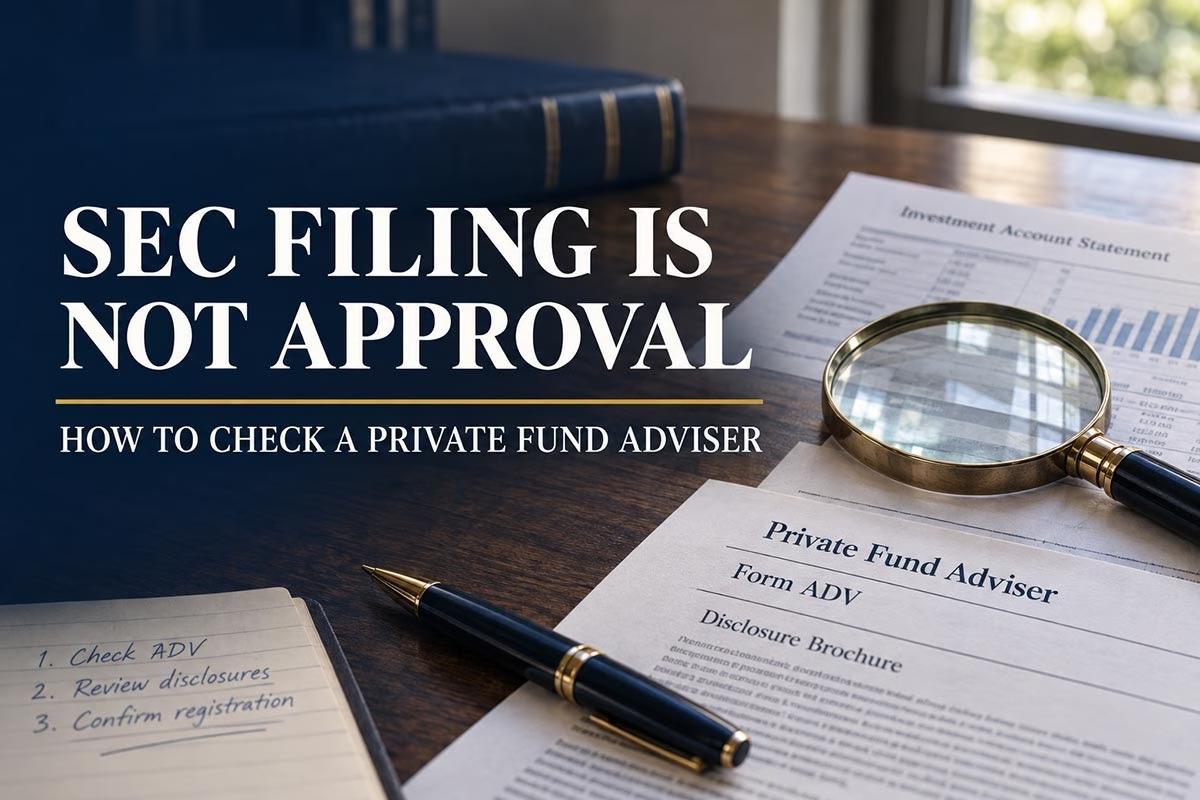
When someone offers you an investment, they may point to an SEC filing as proof that the firm is legitimate. That filing can be worth checking, but it does not mean the SEC has approved the firm, the investment, or the claims being made to you.
The distinction matters for private funds and pre-IPO investments. The SEC has warned that scammers may use exempt reporting adviser filings to make themselves appear legitimate. The agency has also charged 38 entities over allegedly false adviser filings. [1] [2]
What is an exempt reporting adviser?
An exempt reporting adviser, often called an ERA, is an investment adviser that reports certain information to regulators but is not registered with the SEC as an investment adviser. The SEC says an ERA advises private funds. It also warns that an ERA should not claim to be SEC-registered or offer investment advice directly to individual investors. [1]
A filing is not a seal of approval. A firm’s name appearing in a database does not, by itself, verify the people contacting you, confirm that the investment exists, or establish that a fund owns the shares it says it owns.
How to check a private fund offer
1. Confirm the exact name of the firm and the person contacting you
Use the legal names in the offering documents, not only the brand name in a website or pitch deck. Check that the person contacting you is actually associated with that firm. Be cautious if the name, address, email, or phone number does not match across documents and official records.
2. Search official adviser and broker databases yourself
Look up the adviser through the SEC’s Investment Adviser Public Disclosure system. If a broker or brokerage firm is involved, check FINRA BrokerCheck as well. Use the regulator’s own website rather than a link or certificate sent by the person selling the investment.
Review the available information, including the firm’s status, business details, and disclosures. If you cannot tell whether the firm is registered or is an exempt reporting adviser, ask a securities professional or regulator to explain what the record means.
3. Verify the investment separately
A real adviser filing does not prove that a private fund owns a company’s shares or has secured the opportunity being pitched. Ask what entity will receive your money, what you will own, and what records support the fund’s claimed holdings.
For a pre-IPO fund, also ask how the investment is held, whether other funds or special-purpose vehicles are involved, and what fees or markups may apply.
4. Be wary of pressure and extra payment demands
Take your time reviewing the offering documents. Be cautious if a salesperson insists that you must wire money immediately to secure access to a private company’s shares.
Do not send an additional “tax,” “release fee,” or “withdrawal fee” just because someone says it is required to recover or release your investment. The SEC specifically warns about scams that use adviser filings to create trust and then seek money from investors. [1]
What if you already invested?
Keep the offering documents, wire confirmations, account statements, emails, text messages, and any records of follow-up payments or withdrawal requests. Write down the names and contact details of everyone involved.
If you believe you were misled, consider contacting your financial institution promptly and reporting the matter to the appropriate regulator. An SEC filing or enforcement action does not automatically establish an individual claim or guarantee recovery. Whether you have a potential claim depends on the facts and documents.
Sonn Law Group reviews substantial investor-loss matters involving private funds, pre-IPO investments, brokers, and investment advisers. Investors concerned about a significant loss may contact the firm to discuss their situation.
This article is for general informational purposes and is not legal advice. The SEC allegations discussed above are allegations, not findings of liability unless resolved through the relevant proceedings. No recovery is guaranteed.
Sources
[1] SEC INVESTOR, Scammers Using SEC Exempt Reporting Adviser (ERA) Filings to Look Legitimate. (INVESTOR)
[2] SEC, SEC: 38 Entities Feigned Legitimacy as U.S. Advisers Through False Filings to Lure Retail Investors. (SEC)